
Key takeaways
- EmDash is a modern CMS built with TypeScript, Astro, and Cloudflare, designed for fast and scalable websites.
- It offers an alternative to WordPress with a more technical, secure approach aligned with modern web development.
- Its isolated plugin system aims to reduce common security risks found in traditional platforms.
- It uses structured content instead of HTML, making it easier to reuse content across different channels.
- It is designed to integrate easily with APIs, automation workflows, and AI tools.
- It is still in an early stage, so its ecosystem remains limited compared to WordPress.
- It is not aimed at all users, but mainly at projects with more advanced technical needs.
- For marketing and SEO, its value depends on how it is used within a well-structured digital strategy.

Introduction
In recent years, many projects have emerged claiming to be modern alternatives to WordPress, but only a few manage to spark meaningful conversations among developers, agencies, and content creators. EmDash is one of those cases worth taking a closer look at. Not because it will replace WordPress overnight, but because it addresses something many have been looking for: a CMS with a modern development experience, improved plugin security, and a foundation aligned with today’s web stack.
EmDash positions itself as a full stack CMS built with TypeScript, Astro, and Cloudflare infrastructure. Its approach revisits some of the ideas that made WordPress dominant, such as extensibility, admin usability, and a plugin ecosystem, but reimagined with a different architecture. This makes it appealing to several audiences: developers already working with modern frameworks, marketing teams looking for fast and editable sites, and WordPress users exploring new tools.
The real question is not whether EmDash will replace WordPress, but what kind of problem it aims to solve and why it is generating so much attention. That is where it becomes a relevant topic to analyze.
What is EmDash and why is everyone talking about it?
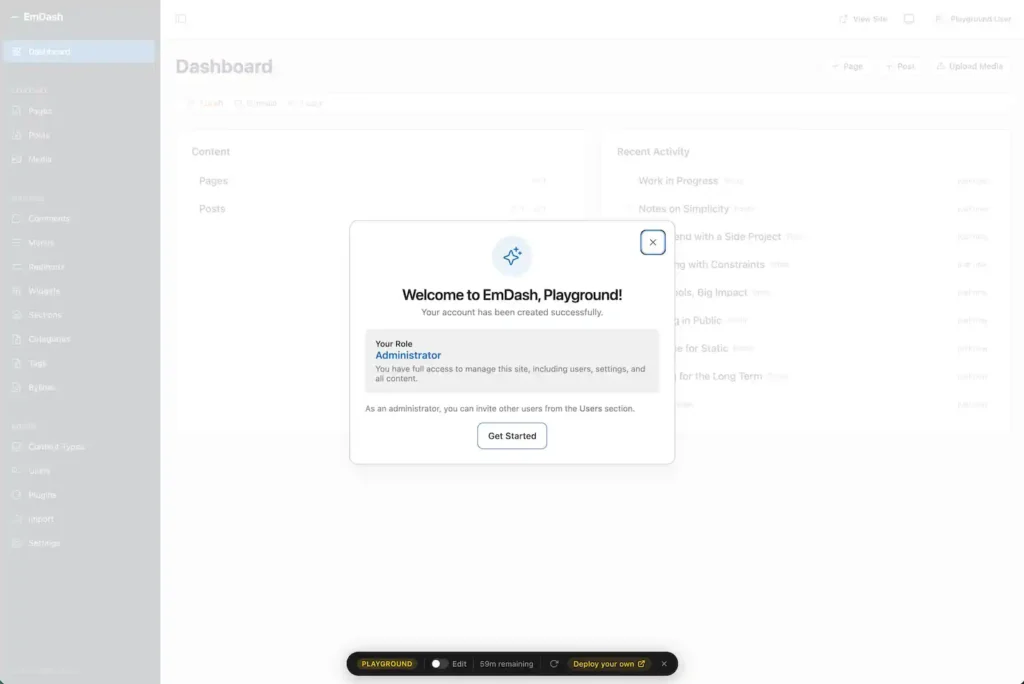
EmDash is a content management system designed for websites built with modern technologies. Instead of relying on PHP and traditional hosting structures, it uses Astro for the front end and services like Workers, D1, and R2 for operations. It can also run on Node.js with SQLite, providing flexibility for development and testing.
What has drawn the most attention is not just its tech stack, but how it handles plugins. In WordPress, one of the long-standing issues is that many plugins have broad access to the system. This enables flexibility, but also introduces security risks, conflicts, and ongoing maintenance challenges. EmDash addresses this with a model where plugins run in isolated environments with defined permissions.
In simple terms, it is not just offering a new CMS. It is proposing a different way of thinking about extensibility and security for web projects that need to scale without inheriting common WordPress limitations.
Why EmDash may appeal to existing WordPress users

WordPress remains a strong platform for a simple reason: it quickly solves many real-world needs. It allows users to manage content, run blogs, service pages, online stores, and corporate sites without starting from scratch. It also benefits from a massive community and extensive resources.
However, it also has known limitations. These include dependency on third-party plugins, performance challenges that often require optimization layers, and a content model that is closely tied to HTML output. For many businesses, this is not a major issue. For more technical teams, it can be.
This is where EmDash becomes interesting. Not because WordPress is failing, but because it offers different answers to existing challenges:
- How to build a more secure CMS without sacrificing extensibility.
- How to manage structured content that is not tied to a single visual format.
- How to better integrate automation, APIs, and AI-driven workflows.
For agencies and development teams, this approach can be valuable in projects where the website is more than just a presentation layer and needs to connect with other systems.
The difference between a traditional CMS and a modern stack CMS

Much of the interest around EmDash reflects a broader trend. Today, many websites are no longer built using the classic theme, plugin, and shared hosting model. Instead, they rely on modern frameworks, serverless deployments, version control, and CI/CD workflows.
In this context, tools like EmDash stand out because they align with the tools developers already use. TypeScript, Astro integration, typed schemas, CLI workflows, and a structure closer to modern software products than traditional CMS platforms.
This does not mean every project should move in this direction. A simple business website can still perform well on WordPress. But when projects require deeper customization, technical integrations, or more control over performance, teams often start exploring alternatives.
That is why EmDash should not be seen as just another CMS. It is part of a larger shift where the boundaries between websites, applications, and content platforms are becoming increasingly blurred.
What does EmDash mean for marketing and SEO?
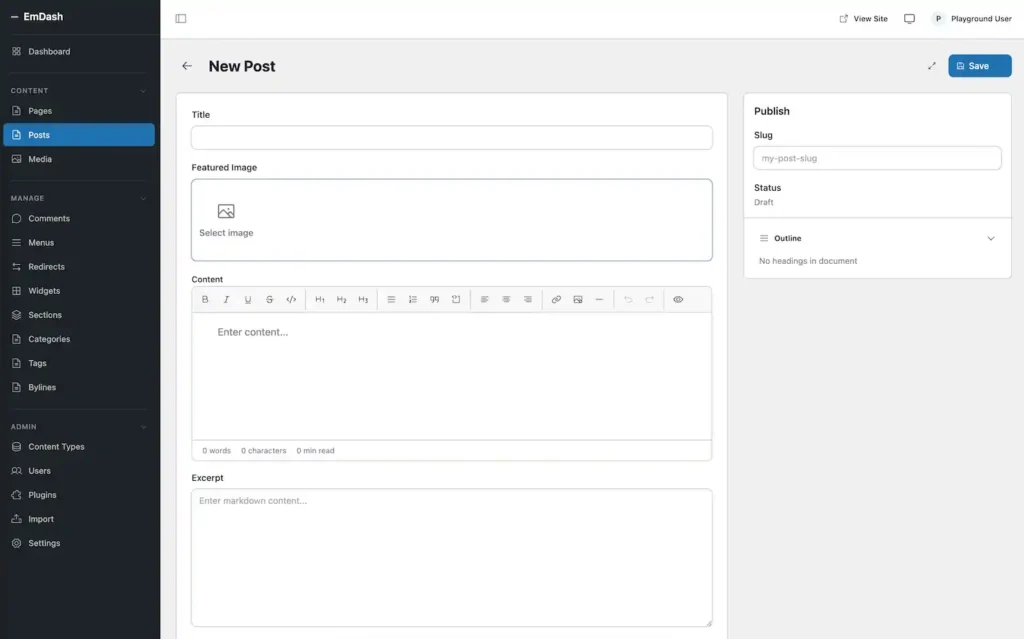
From a marketing perspective, the most relevant aspect is not the technology itself but its practical impact. A CMS that enables faster sites, clear content structures, and better technical control can improve user experience, maintenance, and scalability.
A cleaner and faster site makes it easier to publish consistently, maintain structure, connect forms and automations, and launch new pages without friction. All of this plays a role in SEO and conversion, even if it is not always visible at first glance.
That said, it is important to stay grounded. A modern CMS does not guarantee traffic. No platform replaces a solid content strategy, proper keyword research, well-structured pages, and continuous analysis of user behavior.
In other words, EmDash can support marketing efforts if it helps build a better website. But organic growth still depends on fundamentals: useful content, search intent alignment, logical internal linking, and a smooth user experience.
This connects directly with areas like web design, web development, and SEO: the right technology helps, but its real value appears when aligned with clear business goals.
What are the advantages of using EmDash?

There are several reasons why EmDash is worth paying attention to, especially for those working closely with web technology.
1. A stronger approach to plugin security
Its isolated plugin model helps reduce risks and provides more control over what each extension can do.
2. Structured content
Separating content from presentation makes it easier to reuse across platforms and channels.
3. Compatibility with modern workflows
It aligns naturally with tools like Git, TypeScript, and modern deployment environments.
4. Built with automation and AI in mind
Its architecture supports integration with automation tools and emerging AI workflows.
What should you consider before using it?
It is still important to be cautious. EmDash is in an early stage and comes with certain limitations.
- It does not yet have the ecosystem that WordPress offers.
- Some features depend on Cloudflare infrastructure and paid plans.
- Adoption is still limited outside technical communities.
- For many users, WordPress remains easier and more familiar.
This does not reduce its value. It simply means it should be seen as a promising option rather than a universal solution.
Is it worth using EmDash?
Yes, especially if you work in web development, digital marketing, or content strategy. EmDash reflects an important shift in how CMS platforms may evolve.
For some projects, WordPress will remain the best choice. For others, particularly those requiring a modern and technical foundation, tools like EmDash can offer new possibilities.
Frequently asked questions about EmDash
Is EmDash a direct replacement for WordPress?
Not immediately. It is better understood as an alternative for specific types of projects.
Can it be used for content marketing?
Yes, as long as it supports efficient content creation and management. Strategy still matters more than the platform.
Is it suitable for every business?
Not yet. It is more appropriate for technical teams and modern web projects.
What makes EmDash interesting?
Its plugin isolation, structured content, and alignment with modern development practices.
Should you try it now?
It is worth exploring, especially for learning and experimentation.
Should you stick with WordPress or explore new options?
Every project is different. Some benefit from WordPress due to speed and simplicity, while others may benefit from modern alternatives.
The key is choosing based on real goals such as growth, lead generation, and long-term scalability.
Contact us here and we can help you evaluate the best approach for your project.